If you want to pick up new skills without spending money with not just on the learning but on the certificate, your best choice these days is freeCodeCamp. Out of all the platforms out there, freeCodeCamp stands out because you get a complete, hands-on coding education, and when you’re done with the projects and exams, you get a real certificate. No endless video watching; you actually build things that end up in your portfolio. Sure, there are other sites that offer free online courses with free certificates, but they rarely include practical projects employers care about.
People usually start hunting for free courses with certificates because they’re trying to switch jobs or they just want to learn something new, but they can’t afford to shell out money. The reality, though, is a lot of websites say the learning is “free,” but as soon as you’re done, they hit you with a fee for the certificate like thirty or fifty bucks, sometimes more. That model works for some people, but plenty need both the course and proof of completion, and paying just isn’t an option. Properly free courses do exist. Often from nonprofits, universities that offer open materials, or companies using free lessons to attract talent.
Why Free Certificates Actually Mean Something
Not every free certificate impresses employers. A freeCodeCamp cert, packed with hands-on projects, carries real weight compared to some random quiz certificate from an unknown site. Google Skillshop certificates for things like Google Ads or Analytics also turn heads because managers recognize the tools. HubSpot Academy’s certificates have a similar effect for marketing jobs. The trick is simple: pick the certificate that lines up with the job you want. For general knowledge or if you already have some experience a statement from OpenLearn (run by the Open University) shows you finished a university-style course, which can only help.
Does “free” mean low quality? Not really. In fact, some of these free programs demand more work than their paid counterparts. Take Free Tech Courses Online with Certificates like Harvard’s CS50 before you get that certificate, you have to work through real problem sets and submit a final project. If you slack off, you fail. That’s what gives their certificate value.
Platforms That Deliver Free Certificates Without Sneaky Fees
If you want zero surprises, freeCodeCamp is still one of the best options. Whether you’re into web development, Python, data analysis, or JavaScript, every certificate track ends with a project you built yourself. The certificates are completely free, and you even get a portfolio to show off.
Google Skillshop has you covered for Google Ads, Analytics, and more tests are free and you’ll get your certificate instantly if you pass. HubSpot Academy does the same for marketing, sales, and customer service topics. These courses are usually quick; you can finish them in just a few evenings, which is great if you need something fast for your resume.
If you’re looking for broader subjects, OpenLearn offers statements of participation for hundreds of short courses. You won’t get formal academic credit, but you do finish structured material. Microsoft Applied Skills, and some self-paced AWS and Cisco courses, will give you free badges or credentials after you complete hands-on labs.
How to Pick the Right Course for Your Schedule
Most people drop out of free courses because they pick something way too long for their real schedules. A three-month coding bootcamp sounds exciting until real life gets in the way. If you’re busy, shorter courses from Google Skillshop or HubSpot are a safer bet; you’ll finish, get the certificate, and actually use it.
Before you start, look at how the course is graded. If all you do is watch videos and pass simple quizzes, employers won’t take it seriously. Go for courses that ask you to build something, do labs, or sit a proper exam. Even if it takes longer, the certificate will matter.
A few tips:
- Make sure certificates really are free and not just “free after you pay for an official version.”
- Check recent reviews to see if people actually finished the course and got their certificates.
- Confirm you can share the certificate on LinkedIn or download as a PDF without paying.
- Figure out how many hours a week you’ll need and see if it actually fits your life.
- Start small, with a short course, before you commit to something longer.
A Simple Comparison of Free Online Courses With Free Certificates
| Platform | Certificate type | Typical time | Best for |
|---|---|---|---|
| freeCodeCamp | Project-based certification | 100–300 hours | Coding and web development |
| Google Skillshop | Exam-based certificate | 5–15 hours | Digital marketing tools |
| HubSpot Academy | Certification exam | 4–10 hours | Marketing and sales |
| OpenLearn | Statement of participation | 5–20 hours | General knowledge, soft skills |
| Harvard CS50 | Free certificate after projects | 10–15 hours per week | Computer science fundamentals |
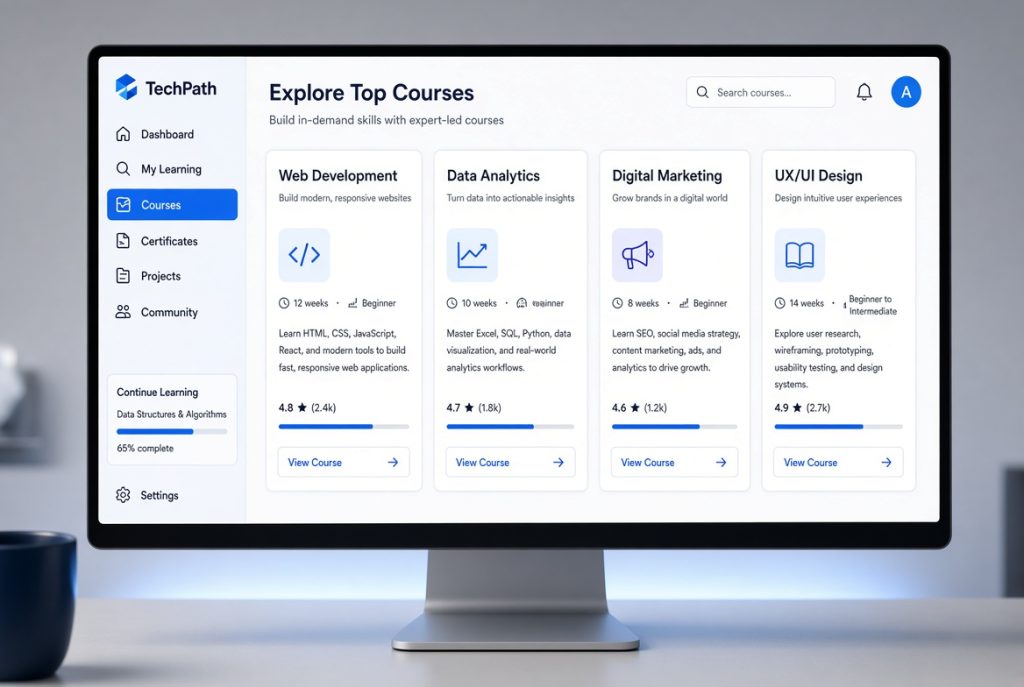
When it comes to coding, freeCodeCamp and Harvard’s CS50 are clear winners. They focus on real project work, not just theory. For marketing, Google and HubSpot get you recognized credentials fast. If you just want to add some general knowledge in a trusted format, OpenLearn’s courses are a solid choice.
AI Courses and Free Certificates
Everyone wants to get into AI right now. Some AI Courses like Google’s Skillshop has free AI content and mini-courses, and freeCodeCamp covers data analysis with some machine learning basics. They won’t rival a university degree, but you’ll still end up with a free certificate plus some new skills. Some paid platforms do bury their certificates behind subscriptions, so if you’re set on free, you’re a bit limited but it’s a good way to get started.
Common Traps to Avoid
The worst thing you can do is sign up for five courses at once. It’s tempting, because everything looks interesting, but you’ll probably end up abandoning all of them. Stick to one platform and one clear goal. Finish your certificate before you jump into something else. Don’t chase the flashiest, longest certificate when all you need is something short and done. A finished HubSpot certificate looks better than several unfinished tracks from different sites.
And seriously, don’t just let your certificate sit in your inbox. Download it and share it. Add it to LinkedIn, mention the projects in your resume and cover letter. Employers won’t know you have it unless you make it visible. The free platforms make sharing easy, so take two extra minutes when you finish.
Getting Real Value From Free Certificates

The people who benefit most use free online courses with free certificates as one step in a bigger plan. They figure out which skill employers want, earn the relevant free certificate, then target jobs that actually require it. They also build a project or case study alongside the course, so their certificate isn’t just a piece of paper but proof they know their stuff. If you follow this approach for half a year or so, you’ll start landing interviews you couldn’t get just sending out plain applications.
Look, free certificates won’t replace a university degree for everything, but they do remove cost as a barrier. Today, freeCodeCamp, Google Skillshop, and HubSpot Academy show that you can learn valuable, recognized skills without paying anything. Try one short course this week, get that certificate, and see what new doors open on your resume. Most people who take it seriously end up with more choices than they imagined when they only looked at paid programs.