Intro prices are just bait. They make website hosting look cheap for a month, but once the promo ends and you factor in renewals, surprise fees, and all the “unlimited” gotchas, reality hits hard. Hetzner stands out for most website owners who want solid hardware and steady bills with no nasty jumps. Shared hosting can be fine for your first tiny site, but once you need real email, traffic, or run a shop, it’s time to upgrade.
Let’s focus on how to judge hosting like you would judge a grown-up invoice, not just a pretty homepage.
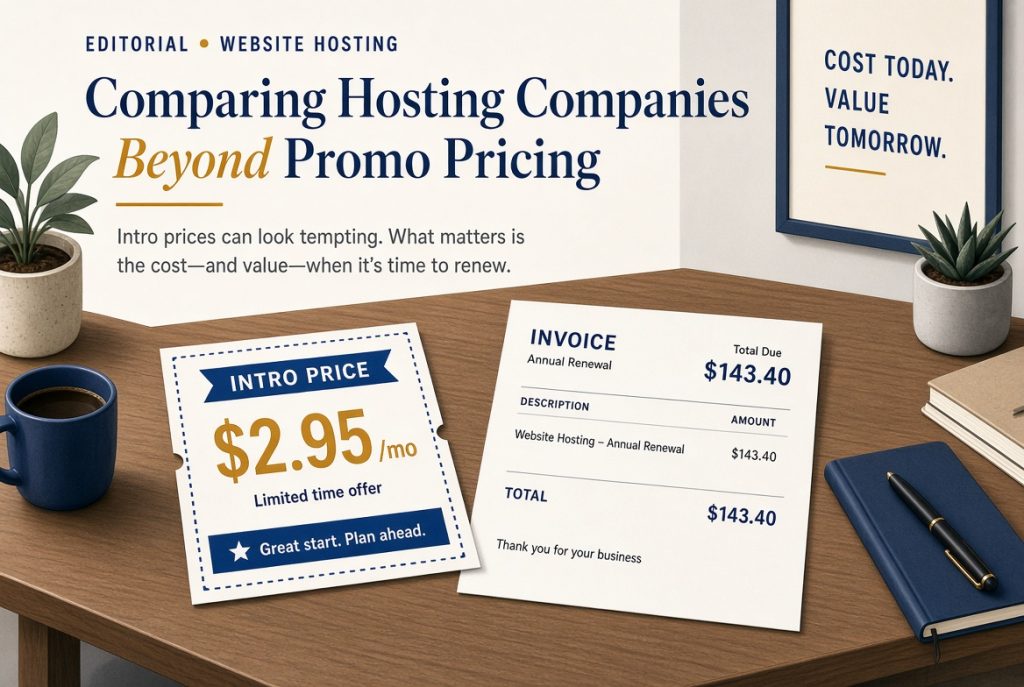
What Intro Prices Don’t Tell You
- That bargain price you see in ads? It almost never lasts past your first year. Most shared hosts promise two or three bucks per month, then suddenly you’re paying ten, fifteen, or more once the promo runs out. That’s not an accident, it’s the whole game. A cheap intro to reel you in, and your second-year bill actually pays for the company’s marketing.
- Then come the add-ons like backups, extra sites, SSL, “priority support,” inode limits, you name it. Maybe bandwidth and storage look unlimited, but in reality, you can get throttled or squeezed by busy neighbors. That comparison chart might show one host as cheapest, but it’s fool’s gold if you haven’t tallied up all those extras.
- Your time matters too. A slick installer can save hours. Slow support can cost you sales if a site restore takes days. Don’t just compare dashboard screenshots but test the recovery process.
How to Actually Rate a Host After Year One
Get your spreadsheet out. Write down the renewal price next to the introductory price. Add the cost for backups, maybe for a dedicated IP, then add the cost for the upgrade you’ll need when your site gets bigger. That’s your real cost.
Now look at hardware. Shared hosting hides specs. VPS and dedicated plans tell you RAM, disk type, and CPU details. NVMe is the real thing. You can ignore marketing buzzwords like “unlimited SSD.” Choose a region close to your audience; far-flung servers can slow things down no matter how cheap.
Support is a product. If chat just repeats documentation, it’s not real support. You want someone who can actually fix things, read error logs, and flag disk issues. Read recent user forums, not just sales pitches.
Lock-in is huge. Can you export your site files and databases easily, without needing a “migration specialist” or paying extra? Can you change DNS and leave quickly? If not, that cheap intro is really just a down payment for being stuck.
When you’re comparing two similar hosts, use this quick checklist:
- Renewal cost, not just the shiny intro price.
- Backup and restore process you can actually test.
- Real hardware specs, not “unlimited” fluff.
- Where the server is and what they do if you push traffic limits.
- How easy it is to leave.
This will stop you from choosing a host based on a logo.
Top 10 Website Hosting Companies Compared
Here are the ones worth looking at, ranging from classic shared options to straightforward VPS providers. Hetzner keeps first place for value after promos. The rest have their own strengths like different regions, easy panels, or reseller perks.
1. Hetzner
Hetzner leads because their prices stay honest. Cloud and dedicated servers cost about what you expect, even after the intro. Real CPU, NVMe disks, great European latency. Beginners won’t find hand-holding here—you bring your own panels and handle updates. Agencies and shops graduating from shared hosting find it worth the setup. If you don’t mind waiting, the auction line is even cheaper.
Pros: Hardware value, stable pricing.
Cons: Limited support; fewer regions.
2. DigitalOcean

DigitalOcean offers clean, predictable VPS plans (“droplets”). Documentation is clear, pricing doesn’t shock you, unless you pile on bandwidth or backups. The appeal is clarity, not intro deals. Pair it with a control panel if you don’t want to do everything through SSH. Can’t beat Hetzner for cheap CPUs in Europe, but nails developer simplicity.
Pros: Clear plans, developer-friendly.
Cons: Extras can add up, CPUs aren’t the cheapest.
3. Linode (Akamai)
Linode built loyalty on simple VPS sizes. Under Akamai, you get those plus a stronger CDN if you need it. Pricing is steady, performance depends on your plan and caching. Great if you already understand their terms (“Nanode” vs “dedicated”) and don’t want to relearn basics.
Pros: Familiar plans, global reach.
Cons: Europe isn’t always cheapest.
4. Vultr

Vultr’s key feature is location variety. You can park servers near specific audiences, not just generic regions. Bare metal is there if you need it. Be careful, it’s easy to spin up lots of test instances and forget to shut them down. One good box plus backups is usually better than a bunch of tiny VMs.
Pros: Location choices, flexible plans.
Cons: Easy to overbuy, you handle patches.
5. OVHcloud

OVHcloud is a popular European brand with VPS, dedicated servers, and public cloud. People stay for price, DDoS protection, and EU data rules. The control panel takes time to learn. Performance is solid if you pick the right plan and read the specs carefully. Cheap isn’t helpful if the disk is slow.
Pros: EU presence, strong network features.
Cons: Complicated UI, support varies.
6. Hostinger

Hostinger is all over the ads. Tiny intro prices, but the renewal cost is what matters. LiteSpeed helps WordPress load quicker, and hPanel is easy for beginners. Works for a single small site if you’re okay with higher prices in year two. On a three-year cost, a VPS is usually a better deal.
Pros: Beginner-friendly tools, cheap entry.
Cons: Big renewal bump, shared limits.
7. DreamHost

DreamHost isn’t flashy, but their pricing is more stable than hosts with constant “80% off” banners. Shared and VPS plans available. Reviews mention privacy and long refund periods more than speed. Good for people who hate surprise invoices.
Pros: Transparent pricing, reliable shared hosting.
Cons: Not the fastest stack around.
8. InterServer

InterServer is a US-focused host with shared, VPS, and reseller options. Pricing is straightforward, not hype-driven. Support is known for being human. Hardware varies with the plan, so check details. Good choice for US presence and reselling without huge contracts.
Pros: Simple plans, reseller-friendly.
Cons: Smaller brand, fewer global locations.
9. Contabo

Contabo offers tons of RAM for the price, luring website owners away from tiny shared plans. But, read the specs like disk type, fair use, support wait times. Big RAM doesn’t help if storage is slow or support disappears. Pick for I/O, not just GBs.
Pros: Big specs, low headline price.
Cons: Sometimes uneven performance and support.
10. IONOS
IONOS is everywhere with “from $1” ads. That intro rate is just to hook you. Huge product selection: shared, VPS, dedicated. Compare the plan you’ll actually keep post-promo. Some like the control panel, others find it messy. Treat it as a menu, not a forever bargain.
Pros: Variety, frequent deals.
Cons: Real price hides behind teaser.
Website Hosting Companies Comparison Chart
| Company | Best after intro | Watch Outs |
|---|---|---|
| Hetzner | Hardware value | DIY ops |
| DigitalOcean / Linode / Vultr | Clean VPS | Bandwidth extras |
| OVHcloud | Network strength | Complicated setup |
| Hostinger / IONOS | Easy start | Renewal price surge |
| DreamHost / InterServer | Honest billing | Fewer premium features |
| Contabo | Big hardware | I/O and support risks |
Renewals, Support, and Lock-in
Ask yourself: What happens when the renewal comes? How quickly can you restore from backup, especially on a weekend? Can you download your whole account without jumping through paid hoops? These answers matter more than the feature checkbox grid. Cheap Reseller Hosting Packages looks tempting, but always check the parent company’s renewal and overage rules, not just the per-account promo. If their prices jump, your margin vanishes. Running your own VPS is often a safer reseller base than getting trapped in a locked shared plan.
If the host’s default panel feels clunky, check out Cpanel alternatives on your own VPS. Over three years, it’s usually cheaper than getting nickel-and-dimed for SSL, staging, and extra sites on branded shared plans.
Quick Comparison Checklist
Open two browser tabs: one for the intro offer, one for the renewal PDF or “regular price” buried in the fine print. Multiply months, factor in backup costs, and add one upgrade. Now you can actually rank hosting companies based on real numbers, not on banner color.
Hetzner stays top for most real sites. DigitalOcean and Linode appeal if you want a friendlier cloud setup. Hostinger and IONOS make sense only if you accept that renewal price up front. Shared hosting is just a starter, not a long-term deal. Choose hosting you can exit easily. Test restoring a backup before you point your domain. Always keep copies of your files and database somewhere else. Treat intro prices as a perk, not a trap. That’s all the comparison you need. Everything else is just marketing.