If you are just starting out and searching for web development programs for beginners, the University of Michigan’s Web Design for Everybody Specialization on Coursera is the best option in 2026. It’s one of those rare courses that really takes you from zero and holds your hand through the first real projects. The lessons are simple, clear, and build up to university-level skills. When students finish, they’re actually ready to build things and not just follow along with videos.
I’ve helped hundreds of people fresh out of high school, or switching careers to get their start in tech. I know how intimidating a blank code editor can feel. That’s why I made this guide. It’s for anyone looking at university web development programs, wondering which ones actually help beginners, and how to pick the one that fits your life.

Why University Programs Make a Difference for Beginners
University-backed web development programs give you much more than just technical skills. They show you how to approach problems, organize your thinking, and work through real coding challenges. You get structure, community, and meaningful feedback none of which you’ll find in random YouTube tutorials.
When I talk to hiring managers, most say that candidates with formal training just get it. They’re better at both creative projects and technical problem-solving. A well-designed intro program covers HTML, CSS, and JavaScript, but also dips into responsive design, basic user experience, and even a taste of backend code.
There have never been more flexible options than there are now. Universities deliver these programs online, so even if you’re working or finishing high school, it’s possible to learn. Flexibility is the new normal.
What Makes a Great Beginner Web Development Program
Start with web development programs for beginners that welcome people with zero experience. The real progress comes from building stuff, not just watching lectures. The best courses use project-based learning and introduce you to key tools employers expect like Git for version control, plus a couple modern frameworks.
Look out for these signs of a quality program:
- Simple, practical explanations of tricky concepts like the box model (in CSS) or JavaScript DOM work.
- Assignments based on real-world problems, not fake examples.
- An active community or online forums where you can ask for help when stuck.
- Clear paths to move from beginner topics into more advanced areas like full stack development.
I love programs that balance the “why” and the “how.” So you’re not just copying code, you’re understanding how responsive layouts and accessibility improve a site for everyone.
Top University Choices for Beginners
A few other strong picks: Rochester Institute of Technology has a solid computing program with web development tracks. They mix clean design principles with practical coding, so you’ll build sites that work and look good.
Bellevue University runs a completely online Bachelor of Science in Web Development. It’s great for working adults or anyone juggling multiple priorities. You start with front end, move to back end, and the order makes sense.
Lipscomb University offers another solid choice, especially if you want a hands-on, supportive environment where it’s okay to ask “beginner” questions without any shame.
One tip: Online Computer Science Degree with web electives can add depth. Some universities let you mix a core comp sci foundation with web classes, which makes your resume stronger in the long run.
Key Skills You Will Learn in These Programs
Any good web development programs for beginners starts with the basics HTML for structure, CSS for visuals, and JavaScript for making things interactive. Then, you’ll move into version control with Git, and learn to publish your work online.
Usually, there’s a rhythm: watch a quick lecture, try a coding exercise, then apply it in a small project. Here’s advice I always give my students:
- Code every day, even if it’s just twenty minutes.
- Build real things, not just tutorials—a portfolio site or a mini blog beats a résumé full of “completed course modules.”
- Join a community, even if it’s just a Discord group, to get early feedback.
- It’s okay to break stuff. In fact, you’ll learn the fastest that way.
Daily practice turns nervous beginners into confident developers faster than you’d think.
Comparing Program Formats and Costs
Every university has a different approach. Some are totally online, at your own pace. Others use live sessions or discussion groups for more interaction. Prices vary but financial aid and payment plans are often available if you know where to look.
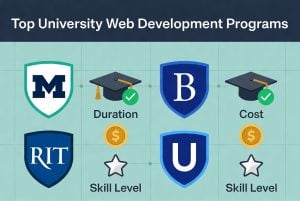
Here’s a basic idea: shorter programs like Michigan’s specialization work well if you’re trying things out. Full bachelor’s degrees are for those who want that deep, robust credential.
| Program | Format | Duration | Approx. Cost | Best For |
|---|---|---|---|---|
| University of Michigan Specialization | Online via Coursera | 4-6 months | $49/month | Absolute beginners wanting flexibility |
| Bellevue University BS | Fully online | 4 years | $459 per credit | Working adults seeking a full degree |
| Rochester Institute of Technology | Hybrid options | 4 years | Varies by residency | Students wanting strong tech community |
Building a Portfolio While You Study
The most useful web development programs for beginners push you to launch actual projects. Employers want proof, not just a list of classes. Piece together a basic site, a recipe app, or even a personal store mockup while you’re learning .The work is your best calling card.
I once had a student go from no coding background to finishing his first semester with a polished, responsive photo portfolio. That one project got him an internship and the confidence to tackle more.
Don’t forget Cyber Security Awareness, even early on. Understanding HTTPS or how to protect user data makes your sites look more professional, and many good programs teach this from day one.
How Tech Education & Online Learning Changed Everything
Online platforms have rewritten the rules. You don’t need to move or quit your job to learn web development from top instructors. You set your own pace, pause when life gets busy, and pick things right back up with no penalty.
This freedom matters, especially if you’re new and juggling other priorities. Many online programs now even add AI-powered tools, which can explain bugs or tricky code with simple hints.
Next Steps After Choosing a Program
Once you pick your program, set a schedule and stick to small weekly goals. Review lessons, experiment on your own, and reach out to classmates you’ll make connections that help with jobs down the road.
Keep your curiosity alive. Web development shifts fast, but the basics stay the same, and solid university web development programs for beginners will always give you that foundation.
I’ve seen people go from complete beginners to junior developers in just a year or two if they pick the right program and actually show up every day. There’s no magic but just steady work, smart feedback, and the courage to start.
When you get stuck (and you will), remember: everyone you look up to started at square one. Choose a program that fits your life, practice regularly, and keep moving. I still recommend Michigan’s program for most beginners. It’s practical and won’t drown you in jargon.
So, take that first step and just sign up for an intro module and give it a try. A year from now, you’ll be amazed how far you’ve come.