So, what is search engine optimisation really all about? If you’re running a website and you’ve found yourself buried on page five of Google you’re not alone. Every day, thousands of people ask themselves why search engines aren’t noticing their sites. That’s where search engine optimization (SEO) steps in. At its core, SEO means making changes and improvements to your website so it ranks higher when people use search engines like Google, Bing, or Yahoo. The goal is simple: get your content in front of more people who are actually searching for what you offer. In this guide, we’ll break down exactly what SEO is, why it matters, and how you can start making an impact even if you’re brand new to all of this.

Why SEO Matters More Than Ever
The internet’s crowded, and getting noticed is tough. Most people stop at the first page of Google results. In fact, over 90% of clicks come from that coveted first page. Find yourself anywhere else, and you’re pretty much invisible. Miss out on those eyeballs and you’re missing out on potential readers, buyers, or clients.
Paid ads can bring a traffic spike, but when the budget’s gone, so is the audience. SEO, on the other hand, delivers long-lasting results. If you put in the effort to create valuable, optimized content, you can keep attracting visitors for months or even years, all without constantly spending money. That’s what makes SEO so cost-effective. Not to mention, people tend to trust sites that show up at the top. Ranking high means more credibility and authority in your niche.
And here’s another thing: search traffic is highly targeted. Someone landing on your site from a Google search is probably already interested in what you do or sell. So, whether you’re a blogger, you run an online store, or you manage a local business site, learning the basics of SEO can really change your online results.
How Search Engines Actually Work
Understanding search engine optimisation (seo) gets a lot easier when you know how search engines tick. Imagine search engines sending out little bots called crawlers or spiders across the internet, scanning websites and picking up new or updated pages. All that info gets stored in a giant database called an index.
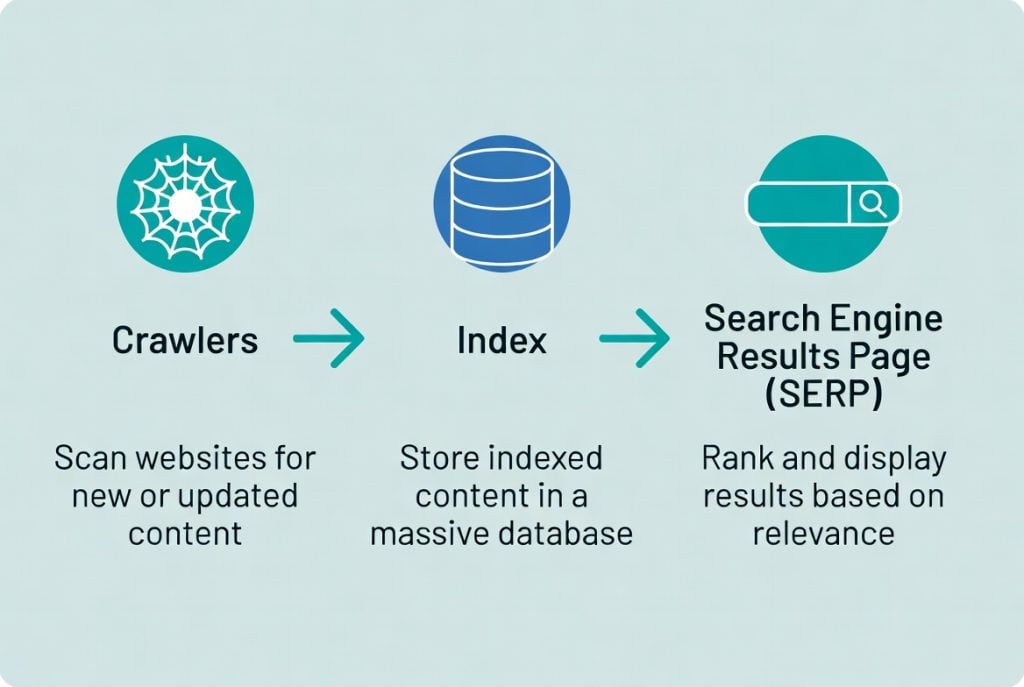
When someone types in a search, Google or Bing sifts through their index lightning fast and decides which pages best match the query. That decision comes down to some pretty complicated algorithms that weigh factors like the relevance and quality of your content, how easy your site is to use, your site’s authority, even how fast it loads on a phone.
And this is where SEO makes all the difference. Tweaking your website tells these search engines, “Hey, my content is useful—show it to people!” Good SEO isn’t about gaming the system. It’s about serving your users and making your site easier for search engines to understand.
Main Types of SEO
SEO breaks down into three big areas, and they work best together:
On-Page SEO Techniques: This is all about optimizing individual pages stuff like using the right keywords in headings and copy, making everything easy to read, using smart structure and good images. Off-Page SEO: Here you’re building your site’s authority, mainly by getting links from other trustworthy websites. Technical SEO: This covers things behind the scenes, like making your site fast, mobile-friendly, secure, and well-organized.
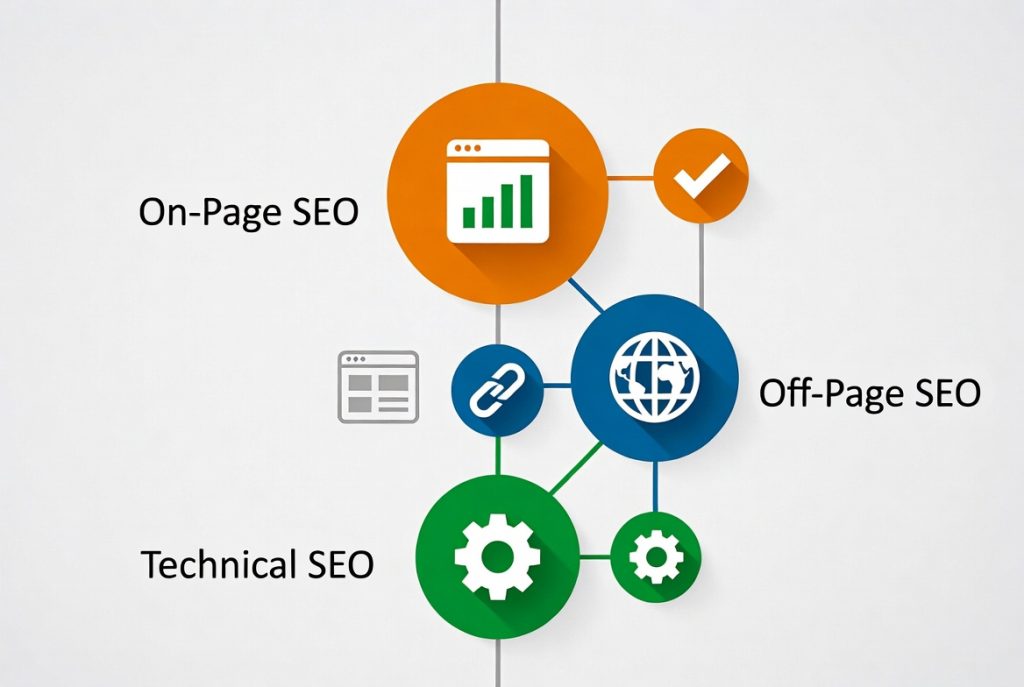
All three matter. Ignore any one of them, and you’ll hit a wall. You can write amazing posts, but if your site is slow or broken on phones, you’ll struggle to get noticed.
Important Ranking Factors and Practical Steps
Key ranking signals boil down to a handful of things: content quality, website performance, and user experience. Search engines love in-depth, well-organized, and genuinely helpful content that matches what users want. Keep content fresh too regular updates send the right signals.
Site speed’s crucial. Reliable hosting for seo can shave seconds off your load time and it matters, both for users and search rankings.
Make your site easy to navigate, with clear menus, strong internal links, and calls to action. If people stick around and click through your site, search engines see that as a vote of confidence.
Ready to get started? Begin with solid keyword research and figure out what your audience is really searching for. Write irresistible titles and compelling meta descriptions so more people click your site in results. Publish useful, well-structured content that answers real questions. Build out logical internal links. Track your progress in tools like Google Search Console and Google Analytics, so you know what’s working and what’s not.
Common Mistakes to Avoid
A lot of beginners trip over the same issues. They stuff pages with awkward keywords, buy links from shady sources, skip mobile optimization, or churn out piles of thin content instead of focusing on quality. These moves backfire and can actually hurt your rankings.
So keep this in mind, search engine optimisation (seo) is a long game. Don’t expect results overnight, but stick with it and you’ll see steady improvements. If there’s one thing to focus on, it’s providing genuine value to your audience. Follow ethical ranking practices. Monitor changes in search algorithms, but don’t sacrifice quality just to chase every new trend.
Final Thoughts
Getting to grips with SEO is one of the smartest moves you can make if you want to grow your site and reach more people. It gives you control over your digital presence and builds steady, compounding results over time. Focus on content people actually need, make your site a pleasure to use, and keep your practices above board and search engines will take notice.
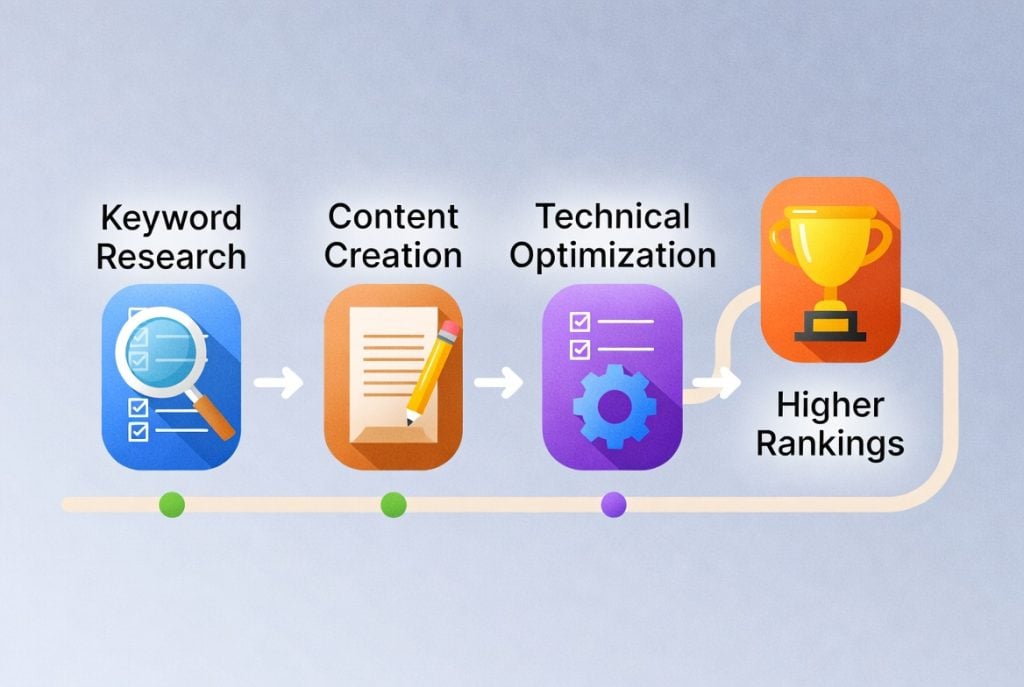
Whether you’re starting from scratch or refining your existing strategy, the basics never change. Stay curious, keep learning, and put your visitors first. Do that, and you’ll climb the SERPs rankings and your traffic one step at a time.