Looking for free tech courses online with certificates? Start with freeCodeCamp. It’s beginner-friendly, totally free, you go at your own speed, and you get certificates that hiring managers recognize as soon as you finish each of their big modules. There aren’t many platforms where you finish real projects, pay nothing, and walk away with proof you actually did the work. Especially if you’re new or switching careers.
Now, tons of sites say their training is free. The difference comes down to what you end up with. Some hand out badges that basically just say “you watched some videos.” Others give you a real certificate, something that looks legit on LinkedIn or a resume. The key is picking a course that builds practical skills and offers a certificate hiring managers respect.

Does Certificates Still Matter in Tech?
Experience always matters more, and everyone knows it. But a good certificate still shows you committed to learning a specific skill set, finished what you started, and can focus long enough to get through a structured program. That signal counts for something, especially if you’re just starting out or changing fields. Certificates also help employers wade through giant resume stacks. When two people look pretty similar, the one with a completed, recognized course usually gets a second glance. Especially for entry-level IT, web dev, data analytics, or cloud jobs.
Just make sure it’s the right certificate. One from a major name is always going to feel stronger than something no recruiter’s ever heard of. Look for programs with a real curriculum, hands-on projects, and a brand people trust.
What Makes a Course Worth Your Time
Not all free tech courses online with certificates are created equal. The best ones have a few things in common: a step-by-step path, real projects you can add to a portfolio, and a certificate that’s more than just your name on a PDF. You want proof you can do the work. So pick courses where you actually build something you can share like a repo on GitHub, a live website, whatever makes sense for your focus. Also check how long each course takes. Some people need something they can finish in a few weeks. Others are ready for longer programs that cover a whole job role, like a six-month bootcamp.
Support is huge. Good forums, helpful mentors, or strong documentation will save you when you hit a wall. Courses that are just endless video playlists tend to leave people stranded halfway through.
Here’s what to check before you hit that “enroll” button:
- Is the entire certificate process actually free, or just the lessons?
- Are there projects you can show in a portfolio?
- Is the platform a name that matters in your industry?
- Can you work at your own speed?
- Do the skills fit the jobs you want?
Asking those questions early saves you from wasting time earning certificates no recruiter cares about.
Popular Platforms and What They Offer
A few big names stand out for free tech courses with certificates. freeCodeCamp is the easiest pick with no surprises, no hidden payment walls. Finish the work, build the projects, show off your certificate. Their programs for Responsive Web Design, JavaScript, Front End Libraries, and Back End Dev work great if you want to learn coding for free and show employers you’re serious.
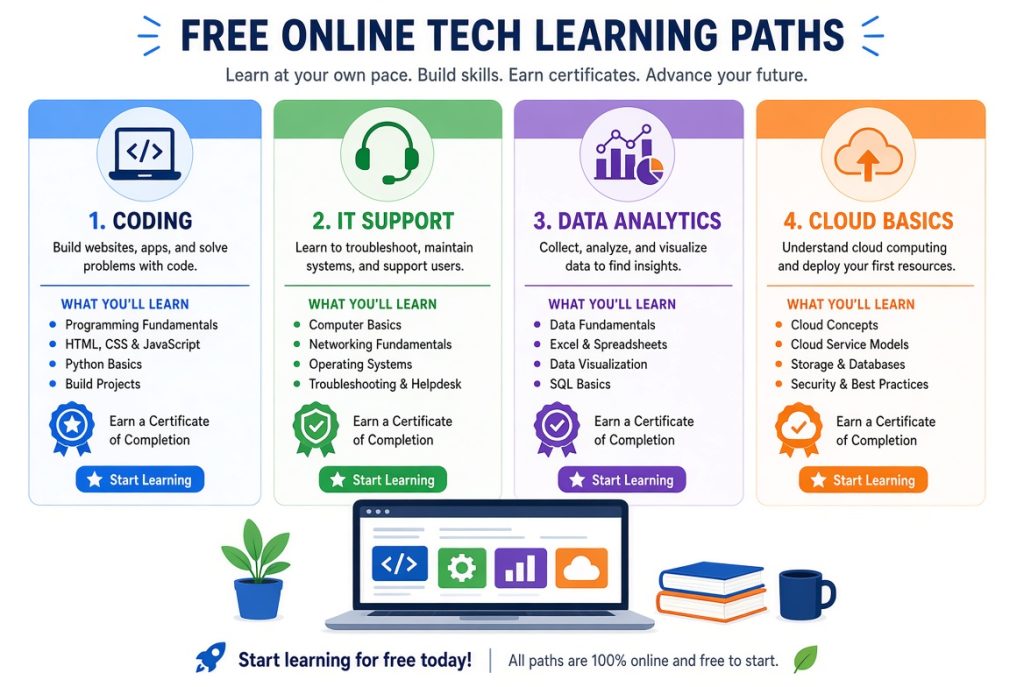
Coursera is another solid choice, especially for Google, IBM, or Meta programs. You can usually audit the courses at no cost, but official certificates normally cost money unless you apply for financial aid (which does work). Google’s IT Support and Data Analytics paths are two of the most respected free certificates out there if you go the financial aid route.
Microsoft Learn and IBM SkillsBuild are worth a look, too. Microsoft Learn offers role-based, modular learning paths with free badges. IBM SkillsBuild has guided training with certificates perfect for newcomers who don’t want to dive straight into heavy programming.
Want a real computer science foundation? Try Harvard’s CS50 on edX. You can take the whole course for free by auditing, and yes, it’s tough, but you’ll come out understanding the basics far better than most intro programs. The paid certificate costs money (unless you get financial aid), but the actual training is gold.
Google, Microsoft, and IBM Options
Google Career Certificates are popular for a reason: they’re mapped directly to real jobs. You’ll find paths for IT Support, Data Analytics, Project Management, UX Design, and Cybersecurity. Most aren’t free by default, but financial aid on Coursera makes them much more accessible. If you want a guided, job-focused journey, they’re some of the best out there.
Microsoft Learn shines if you’re interested in cloud, Azure, or Microsoft’s tech stack. The modules fit easily around a busy life, and some badges or entry-level certificates are free. Their more advanced, recognized certifications do cost money, mostly for the final exam.
IBM SkillsBuild is great for folks who want to get their feet wet in tech but aren’t ready to dive into hard coding. You’ll see courses in cybersecurity awareness, data basics, and tech skills for the workplace, all with more of an educational, less-intense vibe.
There’s not one “winner” here; it’s all about matching your goals to the right program. The table below gives a simple comparison of common options.
| Platform | Cost of Certificate | Best For | Hands On Projects | Typical Time |
|---|---|---|---|---|
| freeCodeCamp | Free | Web development and coding basics | Yes | 300+ hours per cert |
| Google Career Certificates | Often free with aid | IT support, data, UX, cybersecurity | Yes | 3 to 6 months |
| Microsoft Learn | Free badges, paid exams later | Cloud and Microsoft tools | Yes | Flexible |
| IBM SkillsBuild | Free | Beginner digital skills | Some | Weeks to months |
| Harvard CS50 | Free audit, paid verified cert | Computer science foundation | Yes | Several months |
How to Choose the Right Tech Courses Online with Certificates
Start by figuring out your target job that not just which course looks cool. Want to code? Go for freeCodeCamp or a Google dev certificate. Want to handle IT support calls? Google IT Support is your path. Cloud work? Microsoft or AWS programs are your best bet.
Factor in how much free time you really have. Some of us have time for long bootcamps. Others need Short IT Online Courses with Certificates so you can study while working or parenting. It’s better to finish a small course than struggle through a huge one you’ll never complete. And be real about how you learn. Some people like video; others want text and hands-on practice. Always try a few lessons before you decide to grind through the entire thing.
When you’re sizing up free tech courses online with certificates, don’t get distracted by flashy marketing. Check the actual syllabus, look at the projects, and see if past students used those certificates to land interviews. Community reviews are usually more honest than the course landing page.
Getting the Most from a Free Certificate Course
Earning the certificate isn’t enough. Treat every project like you’d send it to an interviewer. Document what you built, what problem it solves, and what you learned. Drop your work in a GitHub repo or personal portfolio. Update LinkedIn not just with the certificate, but with the projects and new skills you developed. A “just a certificate” profile gets ignored, but a certificate backed up by a couple of solid projects gets noticed.
Stick to a realistic schedule, not a marathon. Most people drop out because there’s no deadline. Two or three sessions a week, every week, is better than exhausting yourself and burning out in a weekend. Get involved in the community, even if it’s just reading forum threads or answering a question for a fellow student. You’ll pick up tips, build confidence, and it might even make the tough parts easier. Once you wrap up one program, pause: do you need another certificate, or should you start applying and building out your portfolio? Don’t just keep collecting certificates for the sake of it. These programs are a bridge, not a finish line.
Final Thoughts
There are more high-quality free options now than ever before. freeCodeCamp still wins as the best starter for anyone who wants a genuine, respected, 100% free certificate and hands-on coding practice. Google, Microsoft, and IBM courses are next-level options. Especially if you can grab financial aid or line up free certification badges.

Here’s the smartest way forward: pick one strong program, finish it, and focus on building tangible proof of your skills. Then use that thing as your jumping-off point to apply for jobs, try some freelance gigs, or level up with a deeper course. free tech courses online with certificates actually help if you treat them as prep for real-world work, not just as stuff to collect.
Start this week. Don’t overplan and just choose a course, block out a couple of study sessions, and study the first module. Building momentum beats hunting for “perfect.” The best course is always the one you actually finish.