Website management isn’t what it used to be. A decade ago, you’d just upload files and make edits by hand. Now? Keeping a website running smoothly means wrangling automation, evolving tech, and dealing with a flood of new tools. I work with website owners all the time, and honestly, the pace of change is wild. Here’s what really matters for website management in 2026 and how you can actually use these updates to make your life easier.

AI-Powered Management Tools
AI’s taking over website management, and I mean that in a good way. Tools powered by artificial intelligence don’t just speed things up, they notice patterns you’d never catch yourself. They’ll optimize your images, suggest ways to improve your content, and detect security risks before you even realize something’s wrong.
You’ll see more control panels with built-in AI that handle boring stuff like clearing your cache, tuning the database, and running security scans. What’s great is they keep learning as they go, making them better the more you use your website. That means you’re not spending time babysitting tedious tasks so you can focus on real work.
Stronger Security and Protection
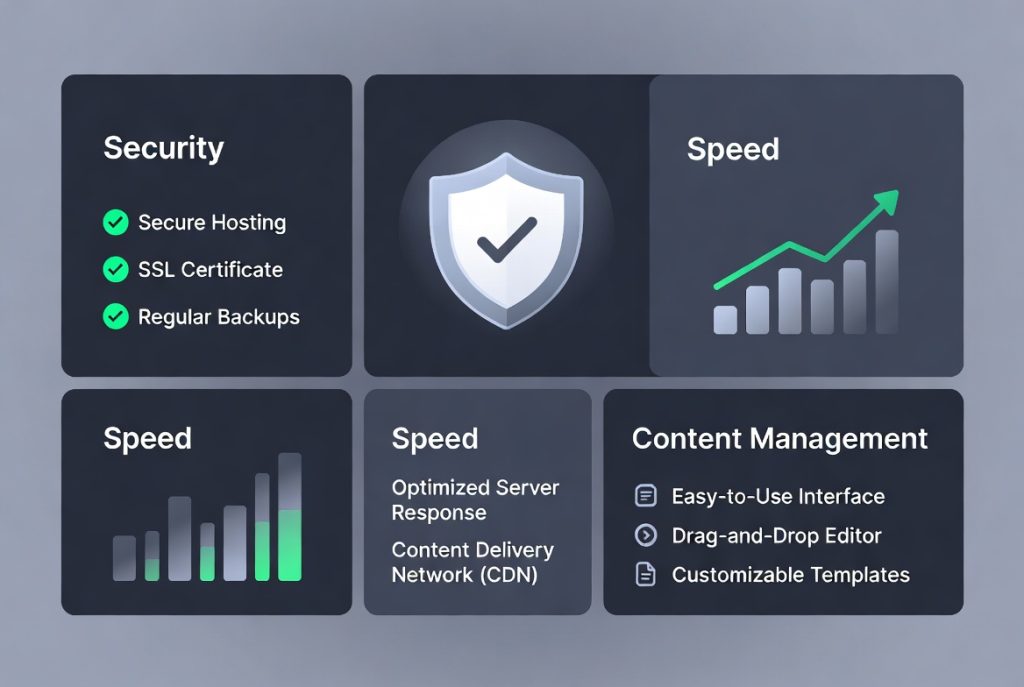
Security isn’t just a box to check but it’s a daily battle. The best tools now watch for suspicious activity and shut down threats instantly. You’re not just reacting to hacks anymore; modern systems spot weird behavior and slam the door before any damage happens.
Look for panels that give you real-time malware scans, powerful firewalls, and automatic backups. Features like two-factor authentication and detailed permission controls are just standard practice now. You sleep easier, and you don’t waste hours running security scans by hand.
Performance Optimization That Works
Website speed still matters. Laggy websites will push your visitors (and your search ranking) away fast. Thankfully, the tools for speeding things up have leveled up, too. Advanced caching, CDNs, smart ways to allocate resources. All of that combines to keep things snappy, even when you’re getting slammed with traffic.
The best part? New hosting control panels adjust server resources automatically depending on how busy things are. They’ll compress images and minify your code without you wrestling with plugin settings or command lines. So, your pages load faster, people stick around longer, and your site pops up higher in search results.
Simplified Content Management Systems
Updating content isn’t a chore anymore. Drag-and-drop editors, real-time collaboration (so you and your team aren’t stepping on each other’s toes), and solid version tracking have all become standard. It’s so much easier to just get things done.
SEO tools are baked in, image optimization happens on its own, and making your site shine on mobile doesn’t require a second degree. You just focus on the message, and the system handles the technical headache.
Smarter Integration and Automation
The magic now lies in tools that actually talk to each other. Your website’s control panel can link directly to third-party apps, analytics platforms, and automation services without a dozen weird workarounds.
Want to schedule content, manage backups, or watch your performance stats on autopilot? Modern panels do all this with a few clicks. You cut out repetitive, error-prone steps, and the whole thing just feels more reliable.
Mobile and Multi-Device Management
Almost everyone uses their phone to surf the web, so website management tools have had to catch up. Now, you can actually control your website from your phone, tweaking things or handling emergencies wherever you are.
Responsive design is built in, making mobile management feel less like a compromise and more like a core feature. You can test, fix, and fine-tune the site across all kinds of devices without extra fuss.
AISEO Tools in Modern Website Management
AI-powered SEO tools are becoming essential. They help you tune your content so it ranks higher without sounding robotic. As search engines keep updating their algorithms, these AISEO solutions are your shortcut to staying in the game and still writing for actual humans.
What’s Next for Website Management?
Technology isn’t slowing down. We’re going to see even smarter AI, more seamless integrations, and stronger security soon. Tools will probably start using voice commands or natural language processing, so you won’t always be stuck clicking through menus. Predictive analytics is coming too; your website will notice issues before they blow up, and automated optimization is getting even sharper.
Making Updates Work for You
If you want your site to keep up, make a habit of keeping an eye on the latest tech but don’t overhaul everything at once. Figure out where things are weakest on your site. Try new tools on a smaller part of your setup first. Training matters too, so connect with others in web development and share what you learn.
Bottom line: technology is there to help you, not trip you up. Add tools and features that simplify things, not make them more convoluted.
Final Thoughts
Website management keeps getting smarter. If you stay informed and take a thoughtful approach to upgrades, you’ll run a high-performance site with way less stress. The best owners are the ones who welcome change without losing sight of their real goals and the people using their sites. The digital world is changing fast, and the people who adapt that’s who wins online.